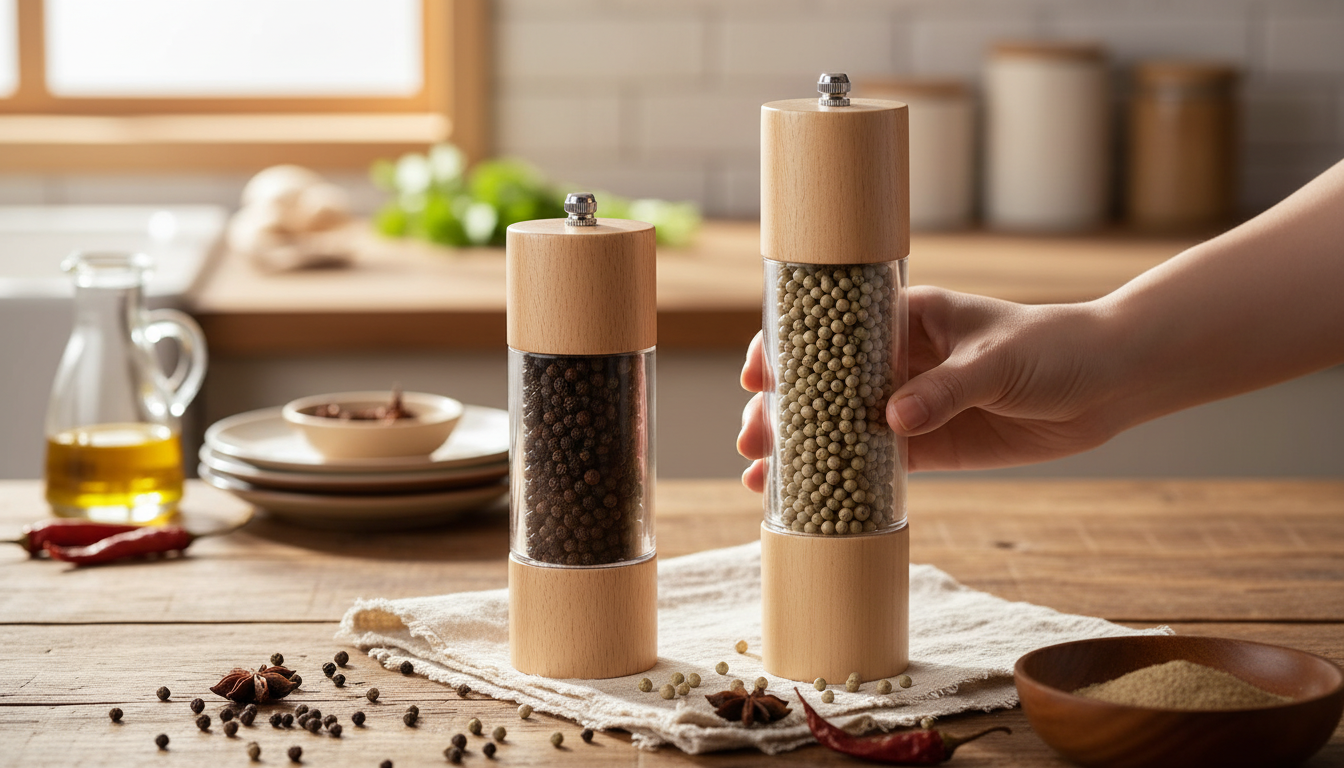
A well-made pepper grinder does more than season food—it streamlines cooking, looks good on the table, and keeps flavor fresh by grinding only what’s needed. This elegant rubberwood and acrylic design balances a warm, natural feel with a clear view of what’s inside, making it easy to use during prep and equally fitting for dinner service.
If you’re updating everyday essentials, start with the piece you reach for constantly. The Elegant Rubberwood & Acrylic Pepper Grinder keeps peppercorns protected until the moment you grind, while its mixed-material look fits comfortably in kitchens that lean modern, classic, or somewhere in between.
Pepper’s signature aroma comes from volatile compounds that fade quickly after grinding. Keeping peppercorns whole until the last minute helps preserve that bright, just-cracked fragrance that makes simple foods taste more finished.
For a deeper dive into what separates a solid pepper mill from a frustrating one, the testing notes and buying advice from Serious Eats are a helpful benchmark when comparing everyday grinders.
Materials matter most when an item lives on the counter. Rubberwood brings warmth and steadiness in the hand, while acrylic keeps things visually light and practical—especially when you’re mid-recipe and want to know if a refill is needed.
| Material | What it’s good for | Everyday advantage |
|---|---|---|
| Rubberwood | Grip and warmth | Comfortable handling during repeated seasoning |
| Acrylic | Visibility and lightness | Quick refill checks without opening |
| Combined design | Balanced look and function | Works for prep and table service |
A pepper grinder earns its keep in multiple “zones” of the kitchen and dining routine. The key is choosing a design that looks intentional in each spot—because that’s what prevents it from getting tucked away and forgotten.
For an easy, cohesive gift set, pair the grinder with clean-lined plates like the Elegant White Stoneware Dinnerware Set – 16-Piece Square Leaf Pattern. If you want a centerpiece moment for the table, a statement piece such as the Glass Fruit Dish Stand can anchor the look while the grinder stays close at hand for finishing touches.
Consistent grinding comes down to one thing: keeping peppercorns dry. Steam and moisture are the fastest way to create clumping, uneven grind, and the need for extra twisting.
Kitchen storage guidance from the USDA FoodKeeper App is a useful reference for keeping pantry items in their best condition—especially in warm kitchens where humidity can creep in.
A grinder that lives on the counter picks up fingerprints, pepper dust, and the occasional splash. A little routine care keeps both wood and acrylic looking sharp without overcomplicating cleanup.
One small habit that helps: don’t store the grinder directly beside the stovetop kettle, simmering pots, or steaming pasta water. A few inches away from heat and steam can make a noticeable difference in how smoothly it turns over time.
The easiest way to make everyday meals feel pulled together is repeating materials and tones across the table. Wood + clear acrylic naturally complements bright whites, glass, and light neutral linens.
It can work for other dry, hard whole spices that fit comfortably in the grinder. Avoid moist, oily, or sticky ingredients (like fresh spices or flavored mixes with oils) since they can clog the mechanism and hold onto odors.
Wipe acrylic with a clean microfiber cloth for quick touch-ups. For residue, use mild soap and water on the acrylic only, then dry fully; skip abrasive pads that can haze the surface.
Keep peppercorns dry, store the grinder away from steam, and refill smaller quantities more often. Avoid leaving it right next to the stovetop, where humidity and heat can build up during cooking.








Leave a comment